
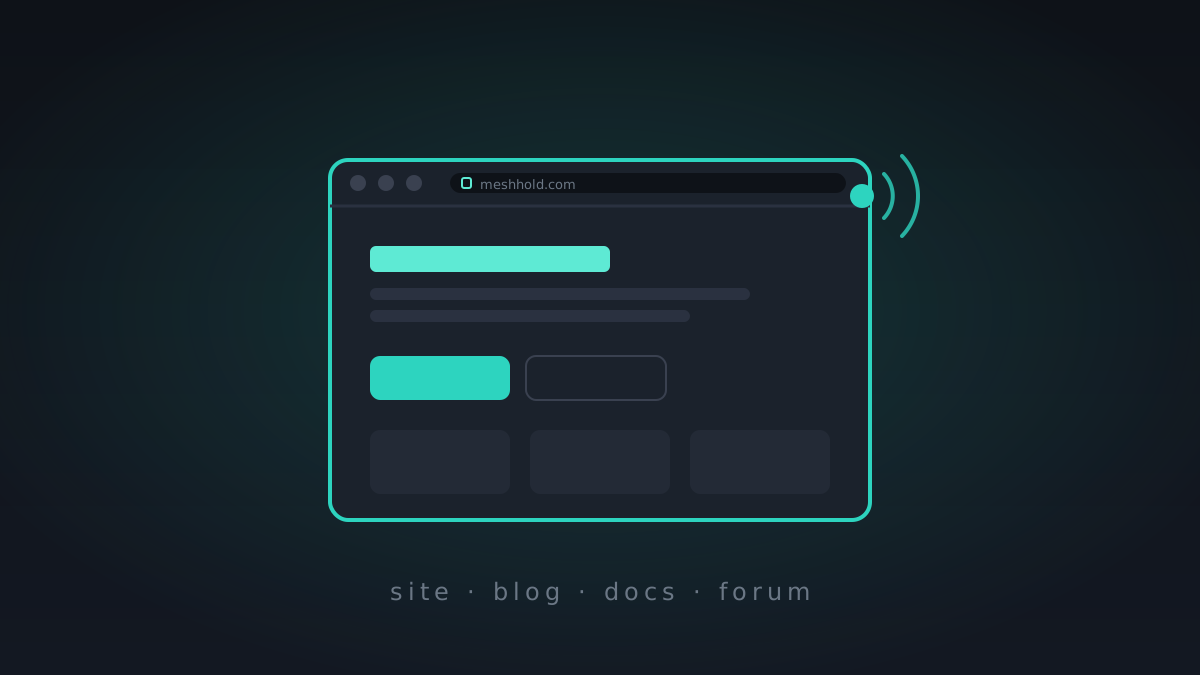
The project finally grew up enough to deserve a front door. As of today, MeshHold has a real website — and you're reading the proof.
For three weeks the only "interface" was a daemon, a web UI it served to itself, and a wall of commit messages. That's fine for building; it's no good for telling anyone what you're building. So this stretch I stepped away from the daemon and gave the project somewhere to live.
What's behind the site
It's a Django application, deliberately lean — no heavyweight extras it doesn't need yet:
- The pages you'd expect — what MeshHold is, who it's for, and how to get the current builds — with the copy editable from an admin panel instead of hard-coded in HTML.
- A release manifest so the download links and version always reflect what's actually published, rather than whatever I last remembered to edit.
- This blog, written in Markdown, with RSS and Atom feeds for anyone who'd rather follow from a reader.
- Documentation, kept as Markdown in the repo so the docs travel with the code.
- A forum, hand-built to match the rest of the site rather than bolting on a third-party one — threads, replies, likes, trust levels and badges, @mentions, tags, attachments, and search.
A necessary bit of honesty
There is no public release yet. What's on the downloads page are development builds, and the version numbers are racing along precisely because nothing is frozen. The site isn't here to announce 1.0 — it's here so there's a single place to follow the work, read the dev log, and eventually grab a real release when there is one.
Three weeks in, going from "empty module" to "files, chat, calls, an AI agent, and now a website" still feels faintly ridiculous. Onward.
Since the AI agent
- Agent maturity: OpenCode session restore with per-session workspaces, a model picker, interactive questions back to the user, session forking, OAuth provider login, and a unified MCP-server management UI
- The website itself: a Django site with admin-editable copy, a release-manifest API, waitlist and sponsor-feature forms, sponsorship handling, this Markdown blog with RSS/Atom, in-repo docs, and a from-scratch forum (auth, threads, likes, trust levels, badges, @mentions, attachments, tags, and search)